
Black carpenter ant
Camponotus pennsylvanicus
6–13 mm
The structural pest of the group. Excavates galleries in moisture-damaged wood and pushes out frass that looks like sawdust with insect parts mixed in.
Identify the ant species and treat the source of activity in kitchens, wall voids and around your property.
*Warranty coverage and terms confirmed with your quote. Visits available across our southern Ontario service areas.
Identification comes first, then the trail is followed rather than treated: where it enters, where it leads, and what is feeding it. If carpenter ants are involved we check for the moisture damage that made the timber attractive, because treatment without that repair invites a return. The plan normally combines a non-repellent bait matched to the colony's current feeding preference with direct treatment of any nest that can be reached and an exterior perimeter band. We ask you not to clean the trails during the first days of baiting, because the trail is the delivery route.
Carpenter, pavement, pharaoh, and odorous house ants need different products and placements. Identification is the difference between eliminating a colony and splitting it.
Slow-acting gel or granular bait matched to whether the colony currently wants sugar or protein. Workers carry it back and share it, which is how the queen and brood are reached.
Where a nest is located in a wall void, window frame, or timber, product is injected into the gallery itself. For carpenter ants this is usually what ends the problem.
A treated band around the foundation, plus treatment of satellite nests in stumps, retaining walls, and slab edges, stops replacement colonies from re-entering.
Carpenter ants follow water. Fixing the leaking sill, blocked gutter, or damp crawl space is what stops the next colony finding the same soft timber.
Tell us your city, property type and where you have noticed activity. We explain the proposed service, price and any follow-up before you book. Your quote depends on:
A line of ants across the counter is the visible five per cent of an ant problem. The rest is a nest, often outside the wall you are looking at, sometimes inside damp structural timber. Which ant you have changes everything: carpenter ants damage wood and need the nest located, pavement ants respond well to exterior baiting, and pharaoh ants split into new colonies if you spray them. Pest Patrol GTA identifies the species first, follows the trail to the source, and treats so that the colony is removed rather than moved.
Look for large black ants of 6 to 13 mm, small piles of frass that resembles sawdust mixed with insect fragments, and a faint rustling in wall or window framing at night. Winged ants indoors in spring are another strong indicator. Carpenter ants have an evenly rounded back in profile, unlike most other household ants.
Winged ants are reproductives produced only by a mature colony. Seeing them inside in spring usually means an established nest in or beside the structure rather than a visitor from the garden, and for carpenter ants a colony takes several years to reach that stage. Keep a specimen in a small container if you can, because the species decides the treatment.
Repellent sprays kill visible foragers and break the pheromone trail, so the colony stops carrying bait back and simply routes around the treated area. Pharaoh ants go further and bud into multiple new colonies when sprayed, turning one nest into several.
Baiting usually shows a noticeable drop within a week to ten days, with full colony elimination over two to four weeks. Carpenter ant work can be faster when the nest is located and treated directly. Pharaoh ant programmes take longest because budding has to be reversed.
Carpenter ants do, over time, by hollowing galleries in framing, sills, and joists, usually where wood is already damp. Pavement, pharaoh, and odorous house ants are nuisance and hygiene pests rather than structural ones, though a pharaoh ant infestation in healthcare or food premises is treated seriously.
Please leave it. The trail tells the technician where the ants enter and where the nest is likely to be, which is the most useful information available on the day. Once baiting starts, leave the trail undisturbed as well, because that is the route bait takes back to the colony.
Foraging outdoors stops in cold weather, so ants seen indoors in January usually come from a nest inside the heated structure, often in damp timber near a leaking roof, window, or bathroom. That makes a winter sighting worth acting on rather than waiting for spring.
The pest, the size of the property, how far activity has spread, and the number of visits all affect the price. A single wasp nest is a very different job from a bed bug programme across three rooms. Tell us what you have noticed and where your property is, and we will explain the proposed service and give you a quote before any treatment starts.
We serve Brantford, Hamilton, Cambridge, Waterloo, Brampton, Mississauga and surrounding areas, including Paris, Ancaster, Dundas and Stoney Creek. We also arrange visits elsewhere in southern Ontario. Share your address when requesting a quote so we can confirm service availability.
We visit homes and businesses in Brantford and Hamilton, with service across southern Ontario. Choose your city for local service and booking information.
Identification, hiding places and life cycle help determine how to treat ants. These details explain what your technician looks for and why preparation and follow-up can matter.
Ants have elbowed antennae, a narrow waist, and, in winged forms, front wings longer than the back pair. Carpenter ants are the largest at 6 to 13 mm, usually black, with an evenly rounded back when viewed from the side. Pavement ants are about 3 mm, dark brown, with fine grooves on the head. Pharaoh ants are tiny at around 2 mm and yellowish, almost translucent. Odorous house ants are around 3 mm and give off a distinctive smell when crushed.
A colony is a queen, brood in all stages, and workers. Eggs pass through larval and pupal stages before emerging as adults, which usually takes several weeks and depends heavily on temperature. Mature colonies produce winged reproductives that swarm, mate, and start new nests, which is why winged ants indoors in spring matter. Carpenter ant colonies can take several years to reach the size where they produce swarmers, so indoor winged ants often mean an established nest in or near the structure.
Tended deep inside the nest. Nothing applied to a surface trail reaches the brood, which is why trail spraying leaves the colony intact.
The only stage most people ever see. Workers forage, lay pheromone trails, and carry bait back to the nest.
Produced only by mature colonies. Winged ants indoors in spring usually mean an established nest in or next to the building.
Carpenter ants excavate smooth galleries in wood that has been softened by moisture: window frames, door sills, roof edges, bathroom subfloor, deck ledgers, and old tree stumps within about 100 m of the house. They frequently keep a parent nest outdoors and satellite nests inside. Pavement ants nest under slabs, driveways, patios, and along foundation edges. Pharaoh ants nest inside wall voids, behind tiles, and near heat and moisture, which is why they persist in hospitals, care homes, and apartment buildings.
Most household ants want sugars and proteins, and the balance shifts through the season, which is why a bait that worked in May can be ignored in August. Carpenter ants feed on honeydew from aphids, other insects, and food scraps; they excavate wood to nest in but do not eat it. Workers share food by mouth-to-mouth transfer, and that behaviour is exactly what a slow-acting bait exploits to reach the queen.
Colonies expand outwards by foraging, and trails follow edges: wires, pipes, foundation lines, tree branches touching the roof, and fence rails. New colonies start from swarming, and pharaoh ants also spread by budding, where a portion of the colony walks away with a queen. That is why spraying pharaoh ants turns one nest into several.
Ant activity in southern Ontario builds from April as soil warms, peaks through June to August, and drops off with cold weather. Carpenter ant swarmers usually appear in spring. Winter sightings indoors are meaningful: they generally indicate a nest inside the heated structure rather than foragers coming in from outside.
Most household ants are a nuisance and a food-safety concern rather than a health hazard. Carpenter ants are the exception: over years, galleries in structural timber weaken framing, sills, and joists, and the moisture that attracted them is usually damaging the wood too. Pharaoh ants are a genuine concern in healthcare settings because they are drawn to wounds, drains, and sterile supplies.
Camponotus pennsylvanicus
6–13 mm
The structural pest of the group. Excavates galleries in moisture-damaged wood and pushes out frass that looks like sawdust with insect parts mixed in.
Tetramorium immigrans
About 3 mm
Nests under slabs, driveways, and patios, pushing fine soil up through joints. Responds well to exterior perimeter baiting.
Monomorium pharaonis
About 2 mm
Tiny and yellowish, nesting inside warm wall voids. Spraying causes colonies to bud into several nests, so baiting is the only sensible approach.
Tapinoma sessile
About 3 mm
Smells of rotten coconut when crushed. Nests in wall voids, under insulation, and outdoors under stones and mulch.
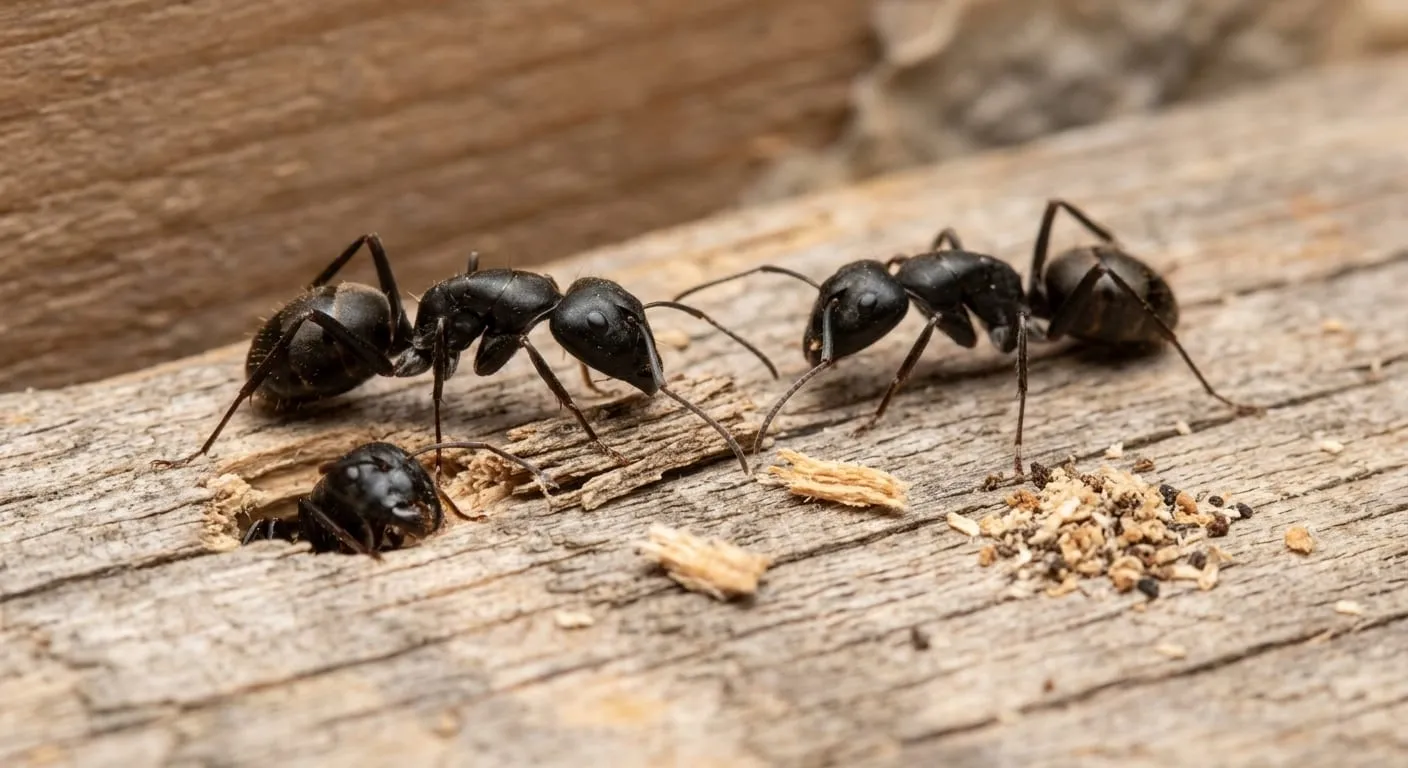
“Carpenter ants eat the wood they damage.”
They excavate galleries to nest in and push the waste out as frass, which is why you find what looks like sawdust below the damage. They feed on honeydew, insects, and food scraps. The damage is real, but knowing they are excavating rather than eating is what tells you to look for damp timber and a nest.
“Spraying the trail solves it.”
You kill the foragers that happen to be out at that moment, a small fraction of the colony. Worse, repellent sprays break the trail so workers stop taking bait back, and pharaoh ant colonies respond by budding into several nests.
“Bait is not working because ants swarmed to it.”
That is exactly what should happen. Heavy feeding in the first day or two means the bait is being carried back to the nest. Leave it alone; cleaning the trail away at that point undoes the work.
“They will go away on their own in autumn.”
Outdoor foraging drops with cold weather, but a colony nesting inside heated structure stays active. Winter sightings indoors point to an indoor nest, not a seasonal visitor.
Tell us the pest, your city and the affected areas. We’ll explain your treatment options, pricing and appointment availability before you book.