
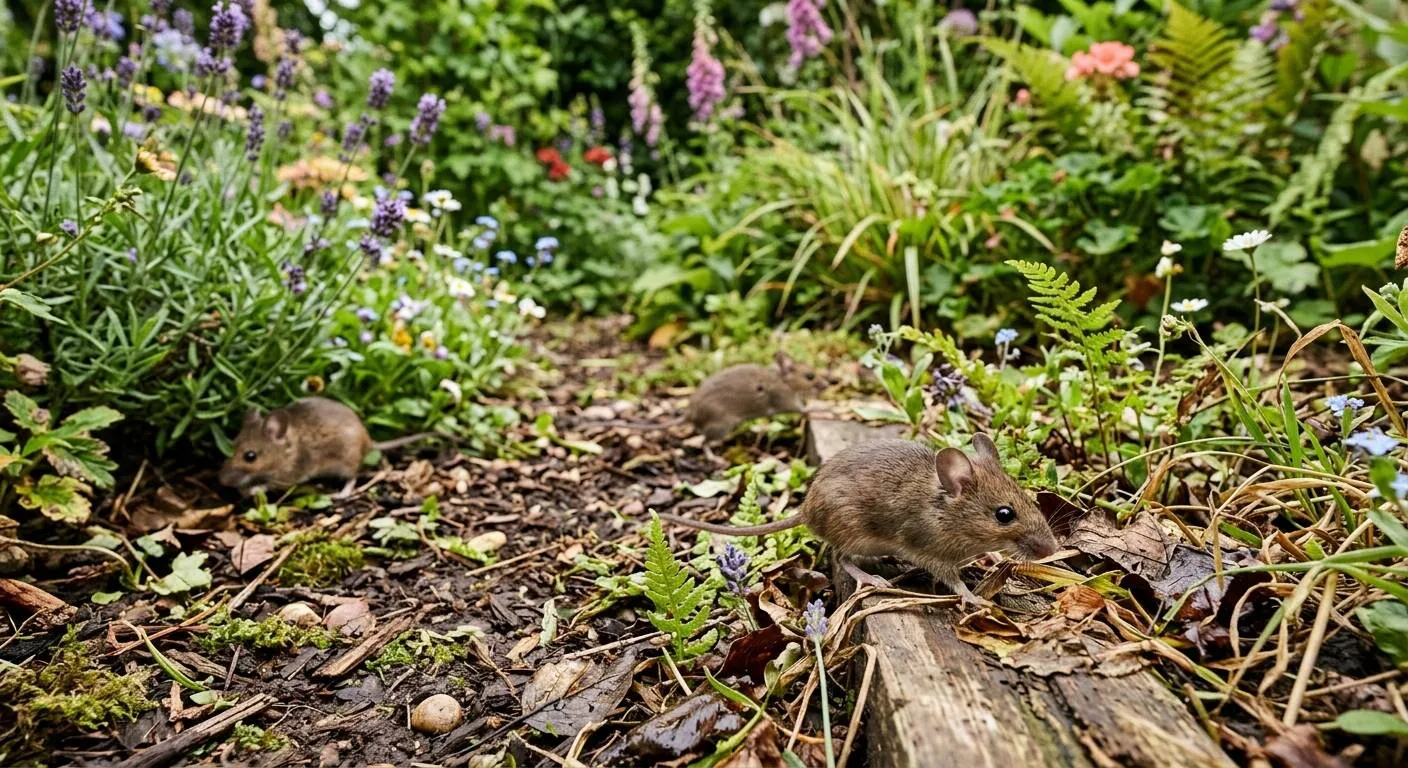
House mouse
Mus musculus
7–9 cm body
The most common rodent inside Ontario homes and businesses. Curious, explores new objects quickly, and nests close to food.
Treat mice and rats, identify entry points, and discuss repairs to help prevent rodents from returning.
*Warranty coverage and terms confirmed with your quote. Visits available across our southern Ontario service areas.
We start with identification, because mouse and rat work differs in trap size, placement, and timing. The inspection maps active runways, harbourage, and every accessible entry point, then the treatment plan sets out trapping and, where appropriate, secured exterior bait stations. You get the exclusion list in plain language so you know which repairs matter most, and a follow-up visit confirms whether activity has stopped rather than simply gone quiet.
Snap and multi-catch traps placed along established runways rather than in the open. Trapping removes rodents where they can be found and disposed of, which is the preferred approach in kitchens, food premises, and homes with children or pets.
Tamper-resistant, keyed stations used where labels and site conditions allow, normally on the exterior and in service areas. Placement, product choice, and record keeping follow the product label and Ontario pesticide rules.
The part that ends the problem: sealing entry points with materials rodents cannot chew through, such as steel wool packed with sealant, hardware cloth, sheet metal, mortar, and new door sweeps and vent covers.
Non-toxic monitors and a return visit confirm whether activity has actually stopped. For commercial sites, a monitoring map and service log support audits and health inspections.
Tell us your city, property type and where you have noticed activity. We explain the proposed service, price and any follow-up before you book. Your quote depends on:
Scratching in the ceiling, droppings behind the stove, or a chewed cereal box usually means mice or rats have already found a way in. Rodent control that only removes the animals you can see tends to fail, because the entry route, the food source, and the harbourage are all still there. Pest Patrol GTA inspects for those three things together, treats the active population, and gives you a written picture of the repairs that keep the problem from repeating.
Look at the droppings. Mouse droppings are 3 to 6 mm long and pointed at both ends; rat droppings are 15 to 20 mm and blunt. Rats also leave wider rub marks, larger gnaw holes, and burrows near the foundation. If you are not sure, photograph the droppings beside a coin and describe where you found them.
About 6 mm, roughly the width of a pencil. A young rat needs around 12 mm. This is why exclusion focuses on gaps that look far too small to matter: utility penetrations, door corners, dryer vents, and the joint between siding and foundation.
Almost always because the entry route or the food source was never addressed. Trapping reduces the population inside; exclusion is what stops the next group arriving. If a neighbouring property, a construction site, or a shared wall is the source, the sealing work matters even more.
A light, recent infestation often quietens within one to two weeks of the first visit. An established population in a larger or multi-unit building can take several weeks with follow-up visits, because new rodents keep testing the building until the exclusion work is finished.
Tell your technician about children, pets, and any wildlife on the property before the visit. Placement is chosen around that: traps in enclosed or inaccessible locations, and tamper-resistant stations where rodenticide is used at all. You will get re-entry and handling instructions in writing.
Do not dry sweep or vacuum them in an enclosed space, because that puts particles into the air. Ventilate the area, wear gloves and a mask, dampen the droppings with a disinfectant, wipe them up, and bag the waste. Ask your technician if the area is large or in a confined space.
Exclusion is the part that ends the problem, so accessible entry points are identified during the inspection and the repair list is part of your plan. Where work is at height or involves structural repair, we tell you clearly which parts need a roofer, builder, or your property manager.
The pest, the size of the property, how far activity has spread, and the number of visits all affect the price. A single wasp nest is a very different job from a bed bug programme across three rooms. Tell us what you have noticed and where your property is, and we will explain the proposed service and give you a quote before any treatment starts.
We serve Brantford, Hamilton, Cambridge, Waterloo, Brampton, Mississauga and surrounding areas, including Paris, Ancaster, Dundas and Stoney Creek. We also arrange visits elsewhere in southern Ontario. Share your address when requesting a quote so we can confirm service availability.
We visit homes and businesses in Brantford and Hamilton, with service across southern Ontario. Choose your city for local service and booking information.
Identification, hiding places and life cycle help determine how to treat mice and rats. These details explain what your technician looks for and why preparation and follow-up can matter.
A house mouse has a body of roughly 7 to 9 cm with a tail about as long again, large ears, and a pointed muzzle; droppings are 3 to 6 mm and pointed at both ends. A Norway rat is much heavier, with a 20 to 25 cm body, a blunt nose, small ears, and a thick tail shorter than its body; its droppings are 15 to 20 mm with blunt ends. Getting this identification right matters, because the two species use different routes, take bait differently, and need different trap sizes.
House mice breed year-round indoors. A female is mature at about six weeks, carries a litter for roughly three weeks, and can produce five to ten litters a year of around five or six pups each. That compounding is why a pair of mice noticed in October can be a resident population by February. Norway rats mature a little slower but still produce three to six litters a year of six to twelve pups. Both species live around a year in a building, so a colony survives on constant replacement rather than long-lived individuals.
Born blind and hairless in a nest of shredded insulation, paper, or fabric. Nests are the reason activity keeps returning to one wall cavity even after traps catch adults.
Weaned and exploring. Juvenile mice are small enough to slip through gaps adults avoid and are often the ones first seen in daylight.
Mature and reproducing. One female can add dozens of rodents to a building in a single season, which is why waiting to act is expensive.
Mice nest within a few metres of a food source, which is why activity concentrates behind appliances, inside insulation, under floorboards, in stored boxes, and in wall voids near kitchens. Norway rats prefer ground level and below: burrows against foundations, crawl spaces, sewer connections, and the space beneath decks and sheds. Roof spaces with squirrel or bird entry often carry mouse activity as well, because an existing hole is a shared doorway.
Mice nibble: 20 to 30 tiny feeds a night from many sources rather than one big meal, which is why they scatter droppings widely and why single-point bait can be slow to take. Rats are more cautious and will avoid a new object in a familiar run for several days before approaching it. Both chew constantly because their incisors never stop growing, and that gnawing is what damages wiring, plumbing pipes, and stored goods.
A house mouse can pass through a gap around 6 mm across, about the width of a pencil, and a young rat needs only about 12 mm. Typical routes are the gaps around gas and water lines, dryer vents, weep holes, garage door corners, worn door sweeps, soffit and roof junctions, and the space where a deck ledger meets the wall. Rodents also arrive in deliveries, firewood, and stored garden furniture.
In southern Ontario, calls climb sharply from late September as overnight temperatures drop and rodents move from fields, ravines, and gardens into heated buildings. Activity is heaviest from October through March. Spring and summer bring outdoor burrowing around foundations, compost, and bird feeders, and construction or lot clearing nearby often pushes rats into neighbouring properties at any time of year.
Rodents contaminate far more food than they eat, and their droppings and urine can carry salmonella and other organisms. Deer mice, which occur on rural and edge-of-town properties, are the local carrier of hantavirus, so dry sweeping of droppings in enclosed spaces is not advised. The more common everyday consequences are chewed electrical wiring, damaged insulation, soiled stored goods, failed health inspections in food premises, and disrupted sleep.
Mus musculus
7–9 cm body
The most common rodent inside Ontario homes and businesses. Curious, explores new objects quickly, and nests close to food.
Rattus norvegicus
20–25 cm body
A burrowing rat found around foundations, sewers, waste areas, and older basements. Neophobic, so it needs patient placement rather than pressure.
Peromyscus maniculatus
8–10 cm body
Bicoloured, with white underside and feet. Found on rural, wooded, and edge-of-town properties, and the species associated with hantavirus.
“Cats and ultrasonic plug-ins will clear mice out.”
A cat may catch the occasional mouse but will not reach a nest in a wall void, and published testing has not shown ultrasonic repellents to clear established infestations. Rodents habituate to sound quickly.
“Peppermint oil keeps rodents away.”
Strong scents may briefly displace rodents within a room, but they do not close a 6 mm gap or remove a food source. Treat them as a comfort measure, not a control method.
“One mouse means one mouse.”
A mouse seen in daylight usually indicates competition for space or food. Sightings tend to reveal a population that is already established rather than a single visitor.
“Seal everything first and they will starve out.”
Sealing a building with rodents still inside traps them in wall voids, where they die out of reach. Reduce the population first, then close the routes.
Tell us the pest, your city and the affected areas. We’ll explain your treatment options, pricing and appointment availability before you book.