
Common silverfish
Lepisma saccharina
12–19 mm
Silver-grey, humidity-loving, and found in bathrooms, basements, and storage areas throughout Ontario.
Treat silverfish in basements, bathrooms and storage areas, with advice on moisture and hiding places.
*Warranty coverage and terms confirmed with your quote. Visits available across our southern Ontario service areas.
The inspection looks at three things together: where silverfish are being seen, what they are feeding on, and where the humidity is coming from. Treatment is applied into cracks, voids, shelf supports, and behind fixtures, with desiccant dust used in dry voids where it will stay effective for a long time. Alongside that you get a short list of the moisture and storage changes that matter on your property, usually ventilation, a leak, or paper stored in cardboard on a basement floor. Monitors placed during the first visit give an objective measure at follow-up, since silverfish are too secretive for sightings to be reliable.
Targeted application into the cracks, voids, shelf supports, and baseboard gaps where silverfish shelter, rather than open floors where they only travel.
A light application of desiccant dust into wall voids, subfloor spaces, and behind fixtures. Dust keeps working in undisturbed dry voids far longer than a liquid.
Where residual treatment is not appropriate near documents, archives, or food storage, bait placements can be used instead.
Leak repair, bathroom and basement ventilation, dehumidification, and correcting condensation. This is the change that decides whether treatment holds.
Moving paper and textiles out of cardboard and into sealed rigid containers, and lifting storage off the floor, removes both harbourage and food supply.
Tell us your city, property type and where you have noticed activity. We explain the proposed service, price and any follow-up before you book. Your quote depends on:
Silverfish are the pest people notice at two in the morning: a fast, wriggling, silver-grey insect on a bathroom floor that vanishes into a crack before anyone can react. They are harmless to people, but they feed on starches and will quietly damage books, documents, wallpaper, cardboard, and stored textiles. They are also one of the longest-lived household insects, taking years to mature and surviving for years as adults, which is why an untreated population simply persists. Pest Patrol GTA treats the harbourage and tells you plainly which moisture and storage changes will decide whether they come back.
Not to people. They do not bite, sting, or transmit disease. The damage is to property: paper, books, wallpaper, cardboard, photographs, and stored natural-fibre textiles. In a heavy infestation the shed scales can add to indoor allergen load.
Humidity above roughly 70 per cent, a dark still space, and starch to feed on. A bathroom with poor extraction, a slow leak under the vanity, or condensation on a cold exterior wall gives them everything they need.
Adults commonly live two to eight years, which is exceptional for a household insect, and they can take months to two or three years to reach maturity in a cool basement. That long life cycle is precisely why an untreated population does not simply die out.
It will make conditions much less favourable and should be part of the plan, but on its own it rarely clears an established population, because silverfish shelter deep in voids and can go a long time without food. Combine humidity control with targeted treatment.
Expect a gradual decline rather than a sudden end. Most properties see a clear reduction over four to eight weeks, with monitors used to measure it. Where humidity has not been corrected, activity tends to hold steady rather than fall.
Yes. They graze the surface of paper and feed on book glue, bindings, and wallpaper paste, leaving irregular holes, notched edges, and yellow staining. Anyone storing archives, business records, or family papers should move them out of cardboard into sealed containers.
The pest, the size of the property, how far activity has spread, and the number of visits all affect the price. A single wasp nest is a very different job from a bed bug programme across three rooms. Tell us what you have noticed and where your property is, and we will explain the proposed service and give you a quote before any treatment starts.
We serve Brantford, Hamilton, Cambridge, Waterloo, Brampton, Mississauga and surrounding areas, including Paris, Ancaster, Dundas and Stoney Creek. We also arrange visits elsewhere in southern Ontario. Share your address when requesting a quote so we can confirm service availability.
We visit homes and businesses in Brantford and Hamilton, with service across southern Ontario. Choose your city for local service and booking information.
Identification, hiding places and life cycle help determine how to treat silverfish. These details explain what your technician looks for and why preparation and follow-up can matter.
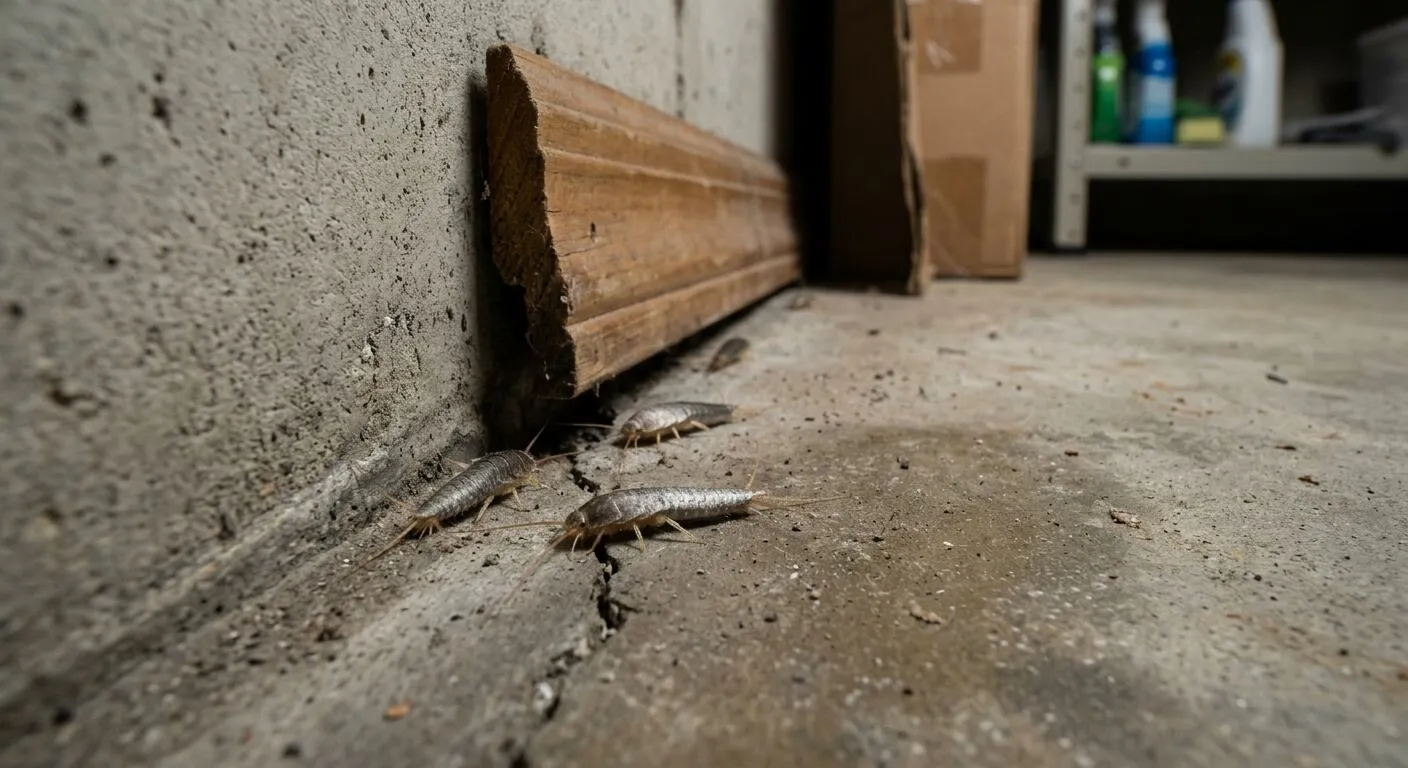
An adult silverfish is 12 to 19 mm, flattened, tapering from head to tail like a carrot, and covered in silver-grey scales. Three long filaments trail from the tail and two long antennae from the head, and it moves in a rapid fish-like wriggle. Firebrats look similar but are mottled brown-grey and prefer hot places such as boiler rooms, near furnaces, and around hot water pipes. Neither has wings at any stage.
Silverfish develop very slowly. Eggs are laid in cracks, a few at a time, and can take weeks to months to hatch depending on temperature and humidity. The young look like small adults and mature over a period that can run from a few months in ideal warm, humid conditions to two or three years in a cool basement. Unusually among insects, they continue to moult after reaching adulthood, and adults may live two to eight years. That long, slow cycle is why silverfish populations build quietly and why treatment is judged over months.
Laid a few at a time deep in cracks and under shelving. Hatching is slow and strongly dependent on temperature and humidity.
A miniature version of the adult, gaining its silver scales after several moults. Development is very slow in a cool basement.
Long-lived and continues to moult, which is unusual among insects. An untreated population will simply persist rather than die out.
They want dark, still, humid places, ideally with a starchy food source nearby: basement shelving, subfloor voids, bathroom cupboards and behind vanities, laundry rooms, under sinks, attic insulation, wall voids near plumbing, stacks of cardboard, bookshelves, and the backs of wardrobes. Firebrats take the opposite end of the range, favouring hot dry spots near furnaces, boilers, and hot water tanks.
Silverfish eat carbohydrates and starch. That includes paper, book glue and bindings, wallpaper paste, photographs, cardboard, cereal, flour, pet food, dead insects, and the sizing and starch in cotton, linen, and rayon. Synthetic fabrics are not eaten, but items stored with starch residue on them are. They can survive long periods without food, which is another reason a population persists in an untouched storage room.
Silverfish are poor travellers and do not fly, so they usually arrive in something: cardboard boxes, second-hand books, stored papers, old furniture, and building materials. Once inside they spread slowly along plumbing chases, wall voids, and subfloor spaces. A sudden appearance in a newly finished basement often traces to boxes brought in from a damp garage or storage unit.
Silverfish live indoors and are active year-round, but sightings rise in Ontario during humid summer weather and in the weeks after a leak, a flooded basement, or a wet spring. They also become more visible in autumn when heating dries some rooms and pushes them toward the remaining humid spaces, such as bathrooms and laundry rooms.
Silverfish do not bite, do not sting, and are not known to transmit disease. The damage is to property: documents, photographs, books, wallpaper, packaging, and stored natural-fibre textiles. Shed scales can contribute to indoor allergen load in a heavily infested space. For anyone storing archives, business records, or textiles, the cost is real even though the insect is harmless.
Lepisma saccharina
12–19 mm
Silver-grey, humidity-loving, and found in bathrooms, basements, and storage areas throughout Ontario.
Thermobia domestica
10–15 mm
Mottled brown-grey and drawn to heat. Found near furnaces, boilers, hot water tanks, and bakery ovens rather than damp basements.
Ctenolepisma lineata
12–18 mm
Marked with dark lines along the back and more tolerant of drier conditions, so it turns up in attics and upper-floor storage.
“Silverfish mean the house is dirty.”
They track humidity, not housekeeping. A spotless but poorly ventilated basement or bathroom suits them perfectly, and a cluttered but dry room often has none.
“They bite.”
Silverfish have chewing mouthparts suited to paper and starch, not skin. They do not bite people or pets and are not known to transmit disease.
“A dehumidifier alone will clear them.”
Lowering humidity is genuinely important and will slow a population down, but silverfish survive long periods without food and shelter deep in voids. An established population usually needs treatment as well.
“They are gone because I have not seen one for a week.”
Silverfish are nocturnal, secretive, and slow-moving, so sightings are a poor measure. Sticky monitors in the affected rooms give a much more honest picture over four to six weeks.
Tell us the pest, your city and the affected areas. We’ll explain your treatment options, pricing and appointment availability before you book.