
Cellar spider
Pholcus phalangioides
Body 7–10 mm
Long, thin legs and loose, untidy webs in basements, crawl spaces, and garages. Harmless and extremely common in Ontario homes.
Spider treatment, web removal and advice on the insects and entry points that attract spiders indoors.
*Warranty coverage and terms confirmed with your quote. Visits available across our southern Ontario service areas.
We look at where webs and egg sacs return, because that pattern tells us whether the problem is entry, harbourage, or a food supply the property is providing. Accessible webs and sacs are removed, harbourage is treated directly, and an exterior perimeter band covers the foundation, door and window surrounds, and soffit junctions where most indoor spiders originate. Where the underlying cause is insect activity around lighting or standing water, we say so plainly, because that is the change that keeps the webs from coming back.
Physical removal of webs and sacs from accessible areas. Taking the sacs away prevents the corner being repopulated by spiderlings weeks later.
Residual application to the specific voids, corners, sills, and frames where spiders shelter, rather than open surfaces where they do not.
Treatment of the foundation line, door and window surrounds, eaves, and soffit junctions, which is where most indoor spiders come from.
Cutting the food supply. This usually means dealing with the flies, midges, or moths drawn to exterior lighting and standing water around the property.
Door sweeps, screen repair, weep hole screening, and sealing utility penetrations, which keeps out ground-hunting spiders as well as much else.
Tell us your city, property type and where you have noticed activity. We explain the proposed service, price and any follow-up before you book. Your quote depends on:
Spiders are a symptom before they are a problem. They settle where there are insects to catch, which is why webs return to the same porch light, basement window, and garage corner no matter how often they are swept away. A useful spider programme treats the harbourage, removes egg sacs before they hatch, and reduces the insect activity and entry gaps that made the spot attractive. Pest Patrol GTA also identifies what you actually have, since almost every spider found in Ontario homes is harmless and the few worth knowing about are uncommon.
Only one species of real medical significance, the northern black widow, and it is uncommon and associated with dry, rocky, undisturbed sites rather than homes. The brown recluse is not established in Ontario. Nearly everything found in an Ontario house is harmless.
Late summer and autumn are the mating season for several common species, so males wander in search of females and come in through doors, gaps, and vents at ground level. It is a seasonal peak in movement rather than a sudden infestation.
Because that spot reliably catches insects. A porch light, a window that leaks warm air, or standing water nearby keeps the food supply coming. Treat the corner and the insect attractant together and the webs stop returning.
They are worth removing rather than worrying about. One sac can hold dozens to hundreds of eggs, so leaving them in place is what leads to a fresh crop of spiders in the same area a few weeks later.
Yes. They eat flies, midges, moths, and other nuisance insects, and a few spiders in a garage or garden are doing useful work. Control is worth it when webs are persistent indoors, when egg sacs are accumulating, or when someone in the household is genuinely distressed by them.
It will clear the current population and the accessible egg sacs, but spiders disperse in from surrounding areas. Lasting results come from combining treatment with proofing and reducing the insect food supply, and many properties benefit from a visit timed before the autumn peak.
The pest, the size of the property, how far activity has spread, and the number of visits all affect the price. A single wasp nest is a very different job from a bed bug programme across three rooms. Tell us what you have noticed and where your property is, and we will explain the proposed service and give you a quote before any treatment starts.
We serve Brantford, Hamilton, Cambridge, Waterloo, Brampton, Mississauga and surrounding areas, including Paris, Ancaster, Dundas and Stoney Creek. We also arrange visits elsewhere in southern Ontario. Share your address when requesting a quote so we can confirm service availability.
We visit homes and businesses in Brantford and Hamilton, with service across southern Ontario. Choose your city for local service and booking information.
Identification, hiding places and life cycle help determine how to treat spiders. These details explain what your technician looks for and why preparation and follow-up can matter.
Spiders have eight legs and two body sections, separating them immediately from insects. Cellar spiders are the long, fragile, small-bodied spiders hanging in loose webs in basements. Common house spiders build tangled webs in corners. Wolf spiders are stocky, fast, hunt on the ground without a web, and are often mistaken for something more serious. The northern black widow, glossy black with a red hourglass beneath, is uncommon in Ontario and generally associated with dry, rocky, undisturbed habitat near the Lake Erie shoreline rather than with houses.
A female wraps her eggs in a silk sac, which can hold anywhere from a few dozen to several hundred eggs depending on the species. Spiderlings hatch, remain near the sac briefly, then disperse, often on strands of silk carried by air currents. Most Ontario house spiders live around a year, though some larger species live longer. Because a single overlooked egg sac can repopulate a corner, removing sacs during treatment matters as much as treating the adults.
A silken parcel holding dozens to hundreds of eggs. Removing sacs during treatment is what stops a corner repopulating after the adults are gone.
Disperses on air currents, sometimes over long distances. This is why new webs appear in a treated area if the surrounding conditions have not changed.
Settles where prey is reliable. Treating the insect attractants is what makes a location stop being worth settling in.
Web-builders want still air, shelter, and passing insects: eaves and soffits, porch and garage lights, window wells and frames, basement joists, crawl spaces, sheds, and the undisturbed backs of storage shelves. Hunting spiders such as wolf and sac spiders live at ground level under stones, mulch, siding, and stored materials, and come indoors through gaps at the base of doors and around foundations.
Every spider in an Ontario home is a predator of other invertebrates: flies, moths, midges, beetles, and each other. That dependence is the key to controlling them. A porch light that draws moths all evening is a feeding station, and changing the light does more for a recurring web problem than sweeping the web away does.
Spiders do not form colonies. They enter through the same gaps other pests use: worn door sweeps, torn screens, unsealed utility penetrations, and open garage doors. They also arrive inside boxes, firewood, garden furniture, and plants brought in for the winter. High numbers indoors almost always mean high insect numbers, not a spider infestation in its own right.
Outdoor webs build through summer as insect numbers rise. Late August through October is the period when spiders are most noticeable indoors: males of several species wander in search of mates and come through open doors and gaps at ground level. Basement and crawl space populations continue quietly through winter wherever there is prey.
The overwhelming majority of spiders in Ontario are harmless to people and are genuinely useful predators of nuisance insects. Bites are rare and usually the result of a spider being pressed against skin in clothing or bedding. The northern black widow is the one medically significant species present in the province and is uncommon and shy; the brown recluse is not established in Ontario, despite frequent claims, and is only ever an accidental import.
Pholcus phalangioides
Body 7–10 mm
Long, thin legs and loose, untidy webs in basements, crawl spaces, and garages. Harmless and extremely common in Ontario homes.
Parasteatoda tepidariorum
Body 5–8 mm
Builds tangled cobwebs in ceiling corners, window frames, and sheds. The most frequent source of recurring indoor webs.
Lycosidae family
Body 10–25 mm
Large, fast, and hunts without a web. Comes in at ground level in autumn and is often mistaken for a dangerous species.
Cheiracanthium mildei
Body 5–9 mm
Pale, builds a small silk retreat in wall and ceiling corners, and accounts for many of the bites reported in Ontario homes. Bites are typically minor.
Latrodectus variolus
Body 8–13 mm
Glossy black with a red hourglass underneath. Uncommon in Ontario and associated with dry, rocky, undisturbed sites rather than houses.
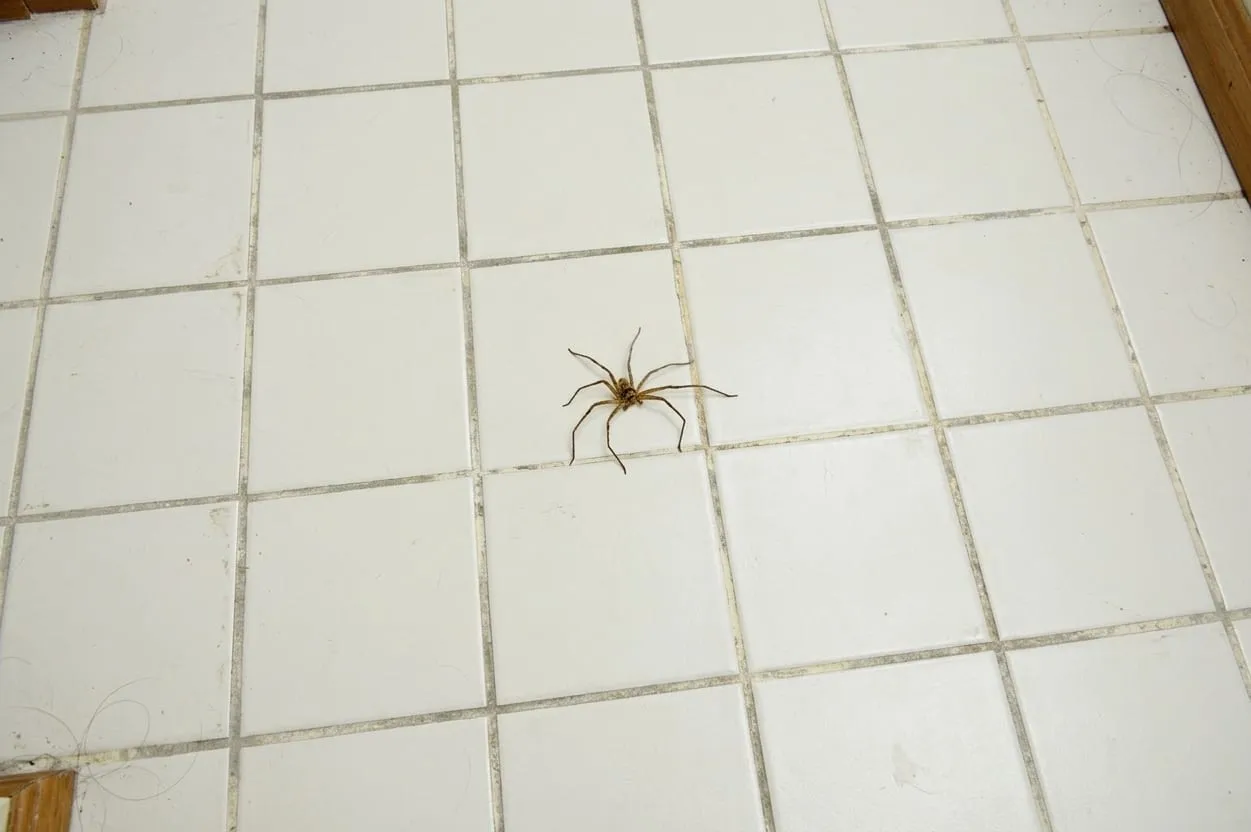
“That is a brown recluse.”
Brown recluse spiders are not established in Ontario. The spiders most often mistaken for them are common house spiders, sac spiders, and wolf spiders, all of which are harmless or close to it.
“You swallow spiders in your sleep.”
There is no basis for this. A breathing, vibrating human is exactly what a spider avoids, and it has no reason to approach a mouth.
“Conkers and essential oils keep spiders out.”
There is no reliable evidence that horse chestnuts repel spiders, and scent-based repellents wear off within days. Sealing the gaps and reducing the insects is what actually works.
“Spraying inside will fix recurring webs.”
If the porch light is still drawing moths and the door sweep is still worn, new spiders arrive within weeks. Indoor treatment alone treats the symptom.
Tell us the pest, your city and the affected areas. We’ll explain your treatment options, pricing and appointment availability before you book.