
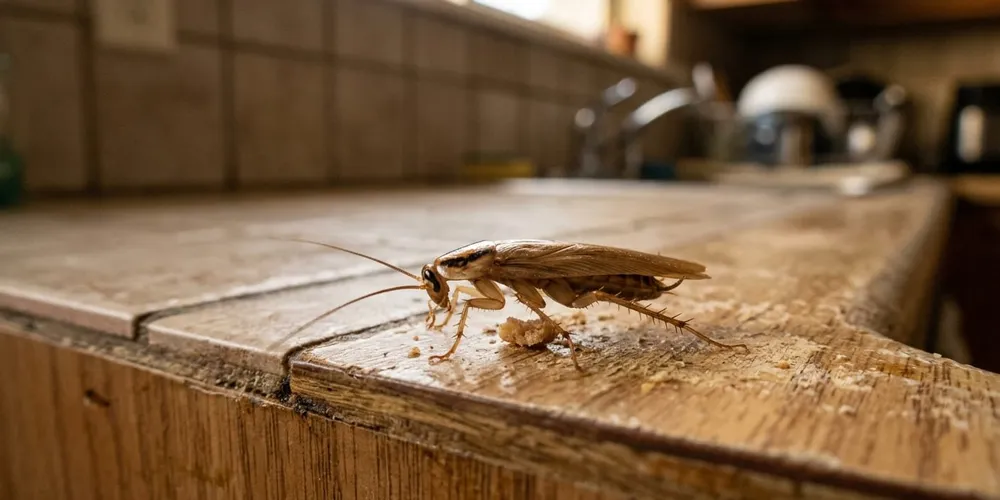
A cockroach sighting after an appointment is a reason to record the details and check the follow-up instructions. A single sighting cannot, by itself, establish whether the treatment has failed or succeeded. The species, treatment method, access and continuing sources of activity all need to be considered.
Keep a small, repeatable record
Use the same format each time: date, room, exact location, approximate number, and whether the insects were moving. Add a photograph when practical. Write “under the dishwasher at 9 p.m.” rather than “everywhere”. Keep observations separate from guesses about where they came from.
When monitors have been supplied, ask where they should remain and how the technician wants counts recorded. University of California IPM guidance uses monitoring to locate activity and evaluate management. A consistent record helps make the follow-up discussion specific.
Ask what your particular treatment should do
Not every treatment works in the same way or on the same timetable. UC IPM notes that bait-based control is not immediate. Ask your technician what change they expect to see, what would warrant earlier contact, and when the next assessment is due.
Avoid using an online claim such as “all cockroaches should be gone by day three” as a pass-or-fail test. Equally, do not accept continuing activity indefinitely without a plan. An agreed review point gives you something concrete to refer to.
Keep food, water and access on the checklist
Health Canada’s guidance combines pest control with sanitation and attention to moisture. Store food securely, remove crumbs and food residues, and arrange repairs for leaks. Let the company know about areas behind equipment that cannot be reached or cleaned.
For a food business, prepare an access note for the next visit: who can unlock storage, when appliances can be moved safely, and which areas must remain operational. Do not move connected gas or electrical equipment yourself just to complete a pest checklist.
Do not add products without checking
Tell the technician about anything already applied and ask before adding a spray, powder, bait or fogger. Do not assume that combining more products will improve the result. Follow the Canadian label and your service instructions, including restrictions around food, people and pets.
Keep the original service report. It should be your reference for what was done and for any instructions about cleaning or leaving placements undisturbed. Request clarification rather than guessing which spots can be washed immediately.
Report changes that affect the plan
Contact the company with your notes when activity increases, appears in another room, or continues beyond the review point you agreed. Also report a previously inaccessible room, a newly discovered leak or an affected adjoining unit. These are useful facts for reassessment, not proof of a particular cause.
In shared buildings, ask the property manager to coordinate access and communications. Avoid assigning blame to another occupant without evidence. The practical question is which areas need inspection and how access will be arranged.
See our cockroach control service for treatment enquiries, or commercial pest control for a workplace monitoring and service discussion.
Sources and further reading
These sources support the general guidance. Product approvals and label directions differ by jurisdiction. For treatment in Canada, follow the Canadian label and the instructions supplied for your appointment.
Put the advice into a plan.
Tell us what you have seen, where it is happening and which city you are in. We will discuss the appropriate next step for your property.
Request a quoteCockroach Control: find your local service page
Choose your city for local preparation and access information.